
Three Myths About Pompeii You Probably Still Believe
There are things we think we know about Pompeii… but the archaeological evidence tells a different story.
Pompeii is one of the best-known ancient cities in the world. And precisely because we have seen it so many times in documentaries, films and photographs, some ideas have become almost impossible to question.
But the archaeological reality is often much more fascinating than the legend.
So here are three myths about Pompeii that are worth debunking.
MYTH #1
“Pompeii was buried by lava”
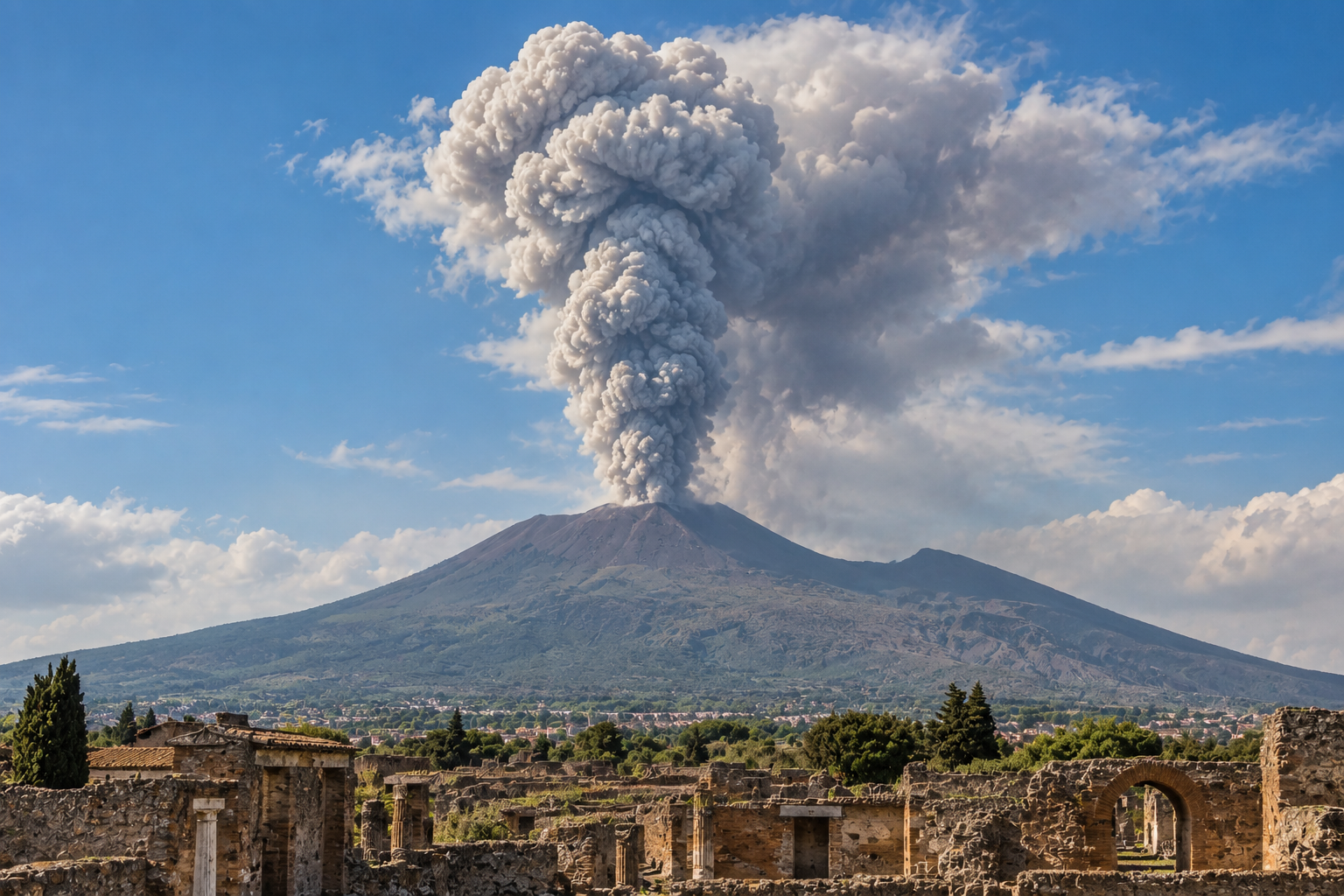
The reality is very different.
When we think about a volcanic eruption, we often imagine a huge river of glowing lava slowly flowing through the streets.
That is not what happened at Pompeii in AD 79.
The eruption of Mount Vesuvius was explosive. Huge quantities of ash, pumice and lapilli — solid volcanic fragments — began falling over the city.
In other words, Pompeii was not buried by a giant flow of liquid lava as it is sometimes portrayed in films.
During the first phase of the eruption, volcanic material progressively covered the city. Later, extremely hot pyroclastic currents reached Pompeii and contributed to its destruction and final burial.
Ash, pumice and lapilli. Not a gigantic river of liquid lava flowing through the city.
Want to see Pompeii differently?
On a guided tour, we can go beyond the usual explanations and discover the details that many visitors miss.
MYTH #2
“If you see a phallus, there was a brothel”
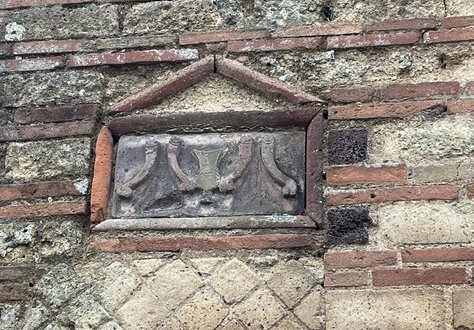
The phallus had an important apotropaic function.
Phallic symbols are everywhere at Pompeii. And this often leads to an immediate assumption: if you see a phallus, you must be looking at a place connected with prostitution.
In Roman culture, however, the phallus could have an apotropaic function: it was associated with protection against bad luck and harmful forces.
It could appear in different contexts and was not limited to places connected with sex. Phallic amulets and pendants were also worn as protective objects.
The Archaeological Park of Pompeii has documented phallic amulets among jewellery and personal objects found in the city, in a context associated with protection against bad fortune.
a phallic symbol on its own is not proof that there was a brothel there. Its protective meaning was much broader.
MYTH #3
“Pompeii had a red-light district”
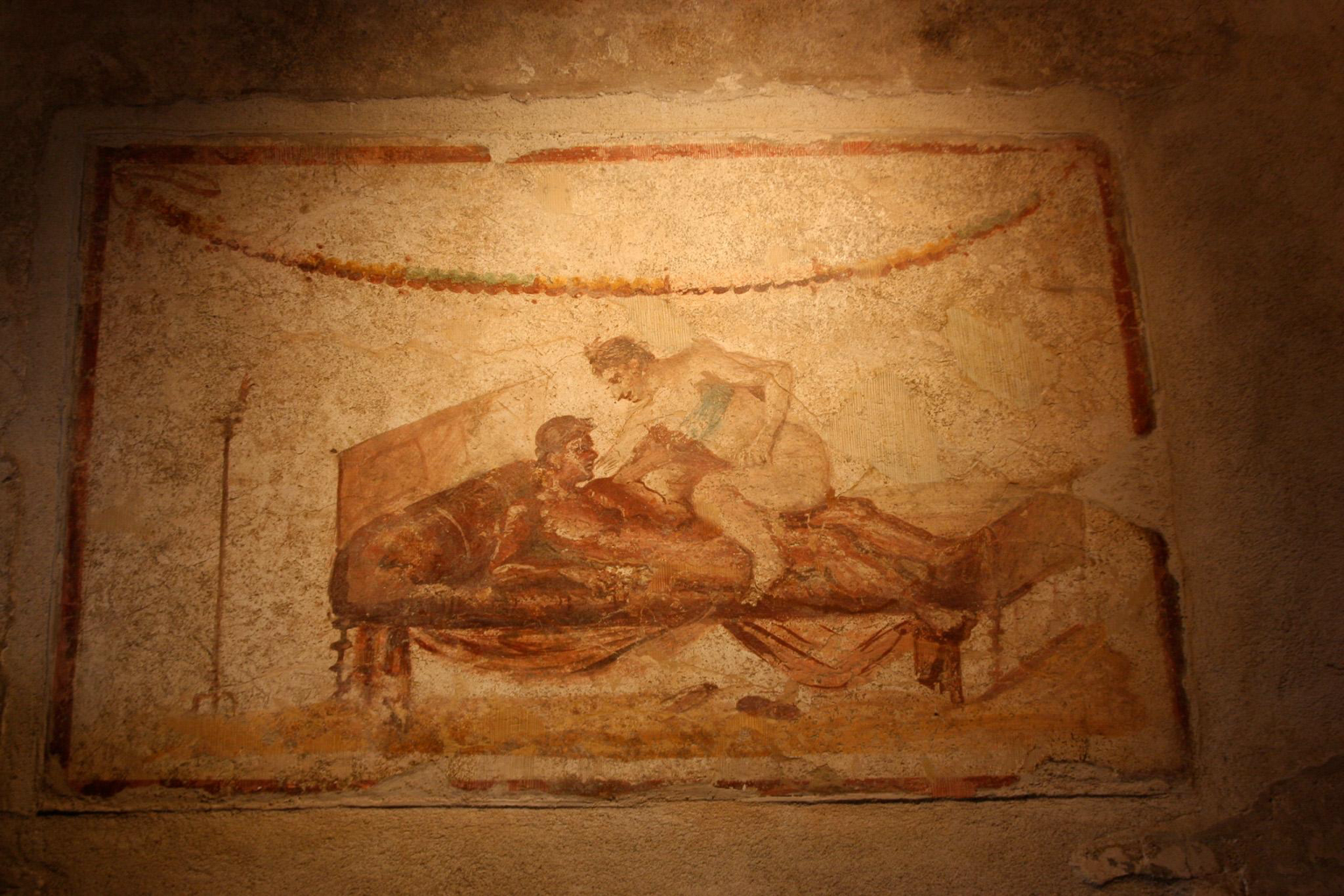
There was no official prostitution district.
Pompeii certainly had places identified as lupanaria, the most famous being the Lupanar that visitors can still see today.
But this does not mean that prostitution was confined to one official district, separated from the rest of the city.
Archaeological and epigraphic evidence instead shows prostitution as a phenomenon embedded in the urban fabric, appearing in different buildings and contexts.
The graffiti are particularly revealing. Some include names, prices and references to sexual services. In several examples, the price of two asses appears.
And there is even a famous example that shows how much prices could vary: a graffito referring to Arruntius, a man, records a price of 27 asses.
Prostitution was a recognised reality of Roman society, but those who practised it were nevertheless strongly stigmatised socially.
Pompeii is much more than it seems.
Myths, graffiti, symbols, houses and everyday stories: on a guided tour we can read the city through these fascinating details.
The real Pompeii is even more fascinating than its myths.
And perhaps that is what makes archaeology so fascinating: every time we think we know a story, one small detail can completely change it.
Pompeii is not simply a city “frozen in time”. It was a city full of people, habits, fears, beliefs, desires and contradictions.
And that is exactly why it is worth discovering in person.
Morosofi Guided Tours • Unusual Guided Tours
